It started in spa treatment rooms. A fine mist of cool, botanical water applied to the face and décolletage during a treatment — a small sensory moment that guests mentioned again and again in feedback cards. "The mist," they'd write. "That cool mist — can we get one for the pool?"
What began as a spa ritual has moved firmly into the mainstream of resort guest experience. Today, cooling mist spray is one of the fastest-growing categories in tropical resort amenities — and the resorts that adopted it early have made it a genuine signature of their brand.
Why Cooling Works as a Guest Experience
The appeal is almost embarrassingly simple. When you're hot — genuinely hot, the kind of tropical-afternoon-on-a-sun-baked-sun-lounger hot — a fine mist of cool water with a mint and botanical fragrance provides immediate, tangible, felt relief. It's not complicated. But it's the kind of sensory moment that guests hold onto, talk about, and look forward to on the next visit.
In a category where so many amenity products are invisible to guests until they're not there, cooling mist is remarkable for the opposite reason: guests notice it immediately, they use it immediately, and they remember it. Some properties have reported guests asking to purchase bottles to take home — a sure sign that a product has crossed from utility into something more.
Where Cooling Mist Fits in the Guest Journey
The beauty of cooling mist as an amenity is its versatility. It solves a real need across multiple touchpoints in the guest's day:
- Pool deck. The most obvious placement — a bottle or dispenser at the sun lounger area or towel station provides an always-available refresh option that guests can use throughout the afternoon.
- Beach service. As part of a beach butler's service kit, a cooling mist becomes a personalised moment of care — a thoughtful "can I cool you down?" rather than just another drink order.
- Fitness and spa transitions. After a workout or before a treatment, cooling mist helps guests transition into the resort's relaxation environment.
- Welcome ritual. Some properties now include a cooling mist as part of their arrival welcome — replacing the traditional chilled towel with something more interesting, more sensory, and more memorable.
- In-room amenity. For guests who want to recreate that poolside feeling in their own space, an in-room bottle of cooling mist carries the resort experience into a private setting.
The Formulation Question
Not every cooling mist is equal. The difference between a product that guests remember and one they use once and forget comes down almost entirely to the formulation.
The key elements: a genuinely cooling active (menthol derivatives or a purpose-built cooling complex), a skin-conditioning base (aloe vera is the standard here, and well-justified), and a fragrance that is fresh and botanical without being overwhelming. The product should feel light, absorb quickly, and leave no residue. And crucially, it needs to actually smell good — not just "not bad."
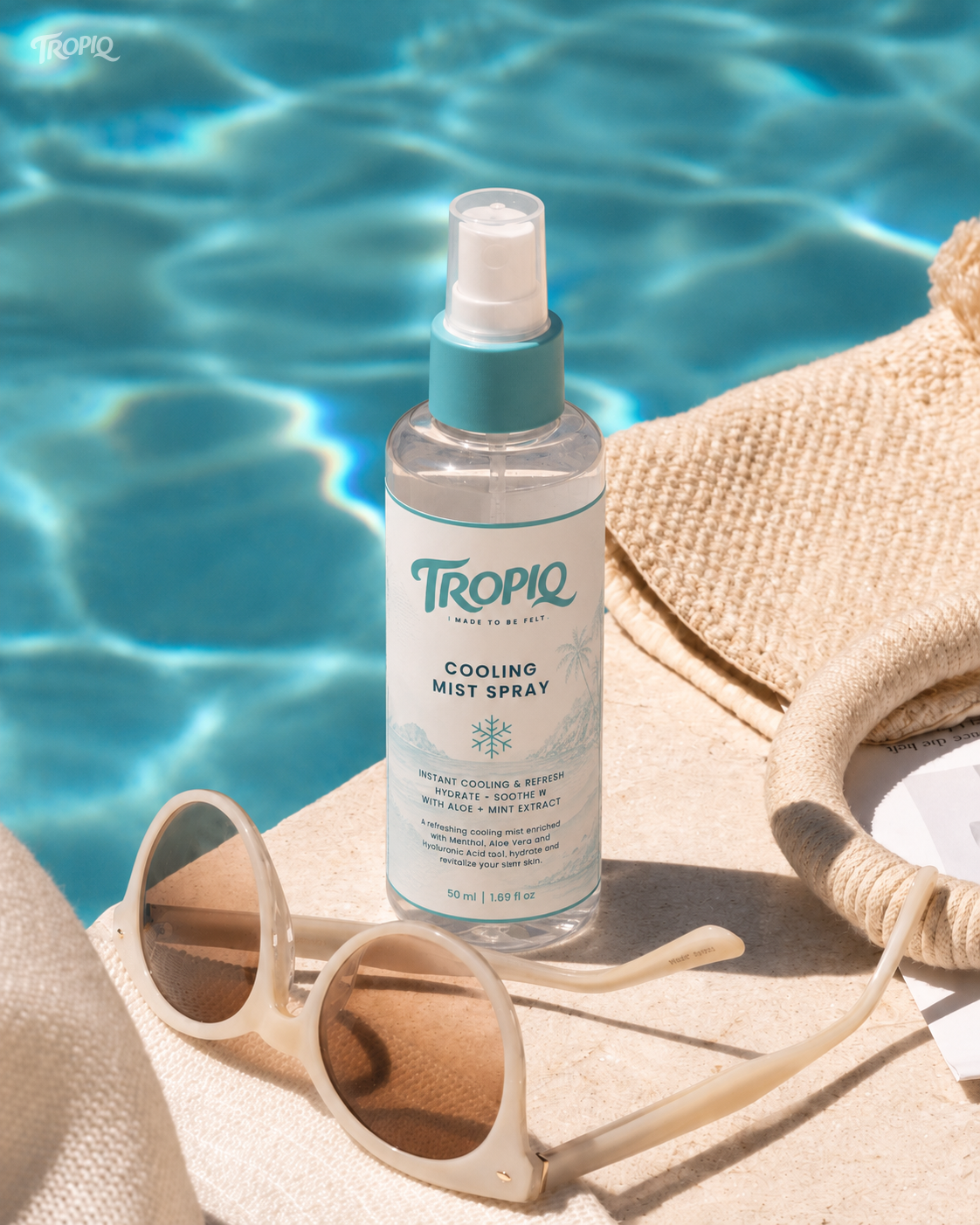
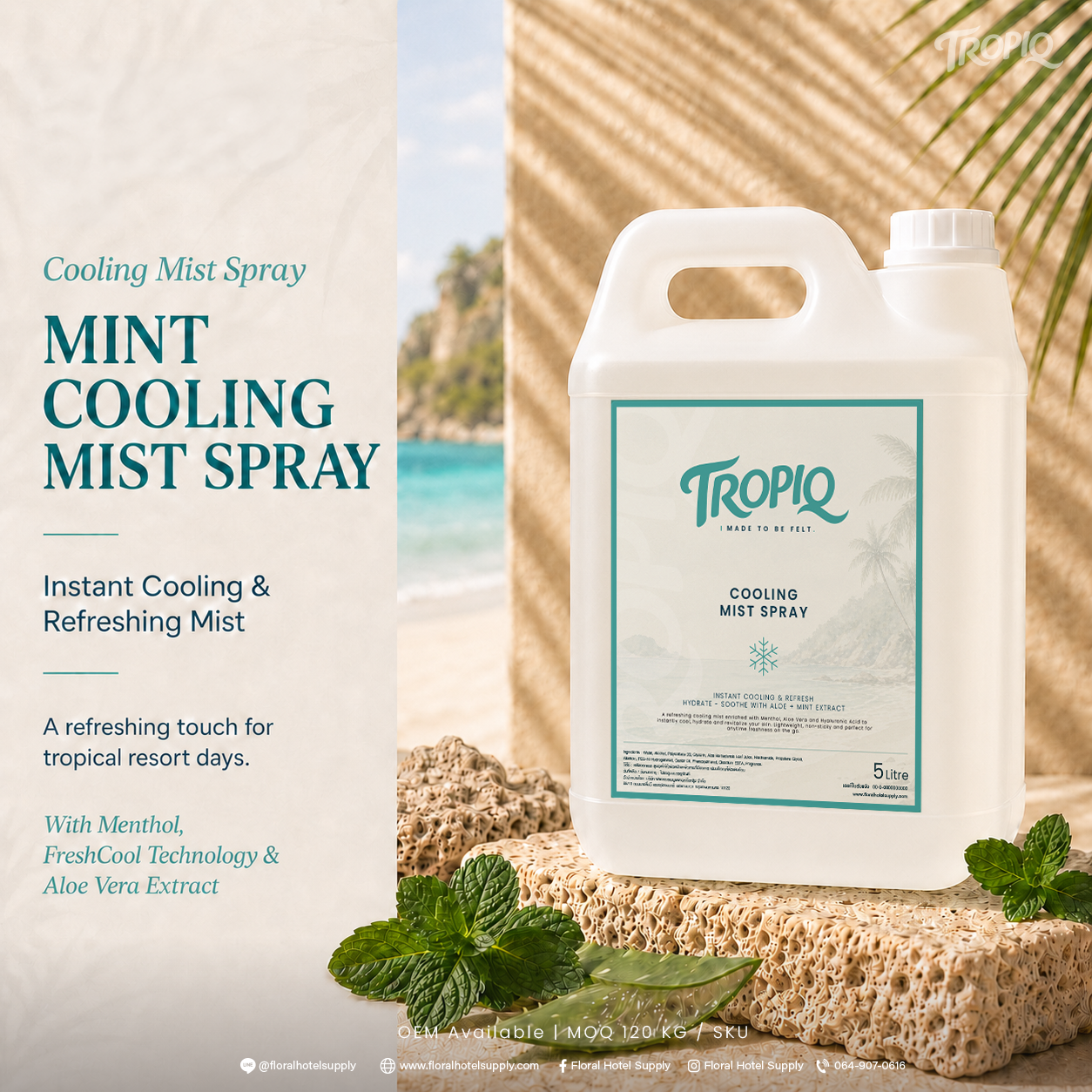
TROPIQ Cooling Mist Spray was developed with this context in mind. It uses a cooling complex alongside aloe vera and mint extract in a fine-mist format that delivers immediate sensory relief without any of the heaviness or stickiness that can undermine the moment. The fragrance is clean, fresh, and unapologetically botanical — designed to feel like it belongs in a tropical environment.
From Trend to Standard
The trajectory for cooling mist in hospitality is clear. What started as a luxury touch at ultra-high-end spa resorts is moving rapidly into the broader resort segment, driven by the same dynamics that elevated quality amenities across the board: guests who have experienced it once expect it everywhere, and properties that don't offer it are increasingly visible by their absence.
The window to adopt this as a differentiator rather than a catch-up is still open. But it's narrowing. The resorts that introduce cooling mist now, as an intentional part of their guest experience, will own the narrative. The ones who add it later will be doing so because everyone else already has.