Something has shifted in the way guests think about the products they use at their resort. Where once a bottle of mosquito repellent was simply expected to work — regardless of what it contained — today's travellers are reading ingredient labels, asking questions, and increasingly choosing to skip products that don't align with their values. For resort operators, this shift represents both a challenge and a significant opportunity.
The DEET Conversation Has Changed
For decades, DEET was the gold standard of insect repellency. It's effective, proven, and widely available. But the same chemical that keeps mosquitoes at bay has also become associated with synthetic fragrances, skin sensitivity, and a particular kind of clinical, chemical smell that feels out of place on a sun-drenched island holiday.
More and more guests — particularly in the premium and luxury travel segment — are actively seeking alternatives. They want protection, yes. But they want it in a form that feels in harmony with the natural environment they've travelled to experience. A botanical spray that smells of lemongrass and citrus is not just a repellent. It's part of the sensory story of the destination.
What the Data Says About Ingredient-Conscious Travellers
Research consistently shows that wellness-oriented travellers — a segment growing faster than almost any other in hospitality — pay close attention to what goes onto their skin. A 2025 survey of luxury resort guests across Southeast Asia found that over 62% preferred plant-derived amenity products over synthetic alternatives when both options were available. More strikingly, more than 40% said they would be more likely to return to a property that offered natural-based guest care products.
These aren't just preferences — they're loyalty drivers. And in a market where guest retention is increasingly difficult, the details matter.
The Practical Case for Botanical Repellents at Your Property
Beyond the wellness angle, there are deeply practical reasons for resorts to consider switching to natural-based mosquito repellents. Here's where most properties see the difference:
- Guest comfort. Natural formulas are typically lighter on the skin. They absorb without the greasy, heavy residue associated with older repellent formats. For a guest heading from evening pool to open-air dinner, that experience matters.
- Scent as an amenity. The right botanical fragrance — citronella and lemongrass, handled well — can actually become a signature of your property. Several high-profile beach resorts have made their custom repellent spray part of their guest welcome ritual.
- Alignment with sustainability commitments. If your property has sustainability goals or eco-certifications, the products you supply to guests should reflect those values. A DEET-based repellent in a single-use plastic bottle is at odds with most modern resort sustainability narratives.
- Staff confidence. Guests often ask staff about amenity products. When a team member can speak genuinely about a botanical formula — "it's made with citronella and lemongrass, it smells wonderful and it really works" — that's a very different conversation than "I'm not sure what's in it."
How to Introduce Natural-Based Repellent at Your Property
For resorts thinking about making the switch, the transition is straightforward. The key considerations are placement, presentation, and education.
Placement is critical. Natural repellents work best when they're accessible at the moments guests need them most — at the beach bar as the sun goes down, at the excursion desk before a nature walk, at the entrance to the pool deck at dusk. A product that sits in a room amenity kit unseen and unused isn't solving anyone's problem.
Presentation matters too. A well-packaged botanical spray communicates quality. It says: this resort has thought about this, and they chose something worth using. That impression extends to the brand as a whole.
Finally, staff education — even brief — ensures the team can speak to the product confidently and recommend it at the right moment. A genuine personal recommendation from a team member is worth far more than a brochure in a welcome pack.
The TROPIQ Approach
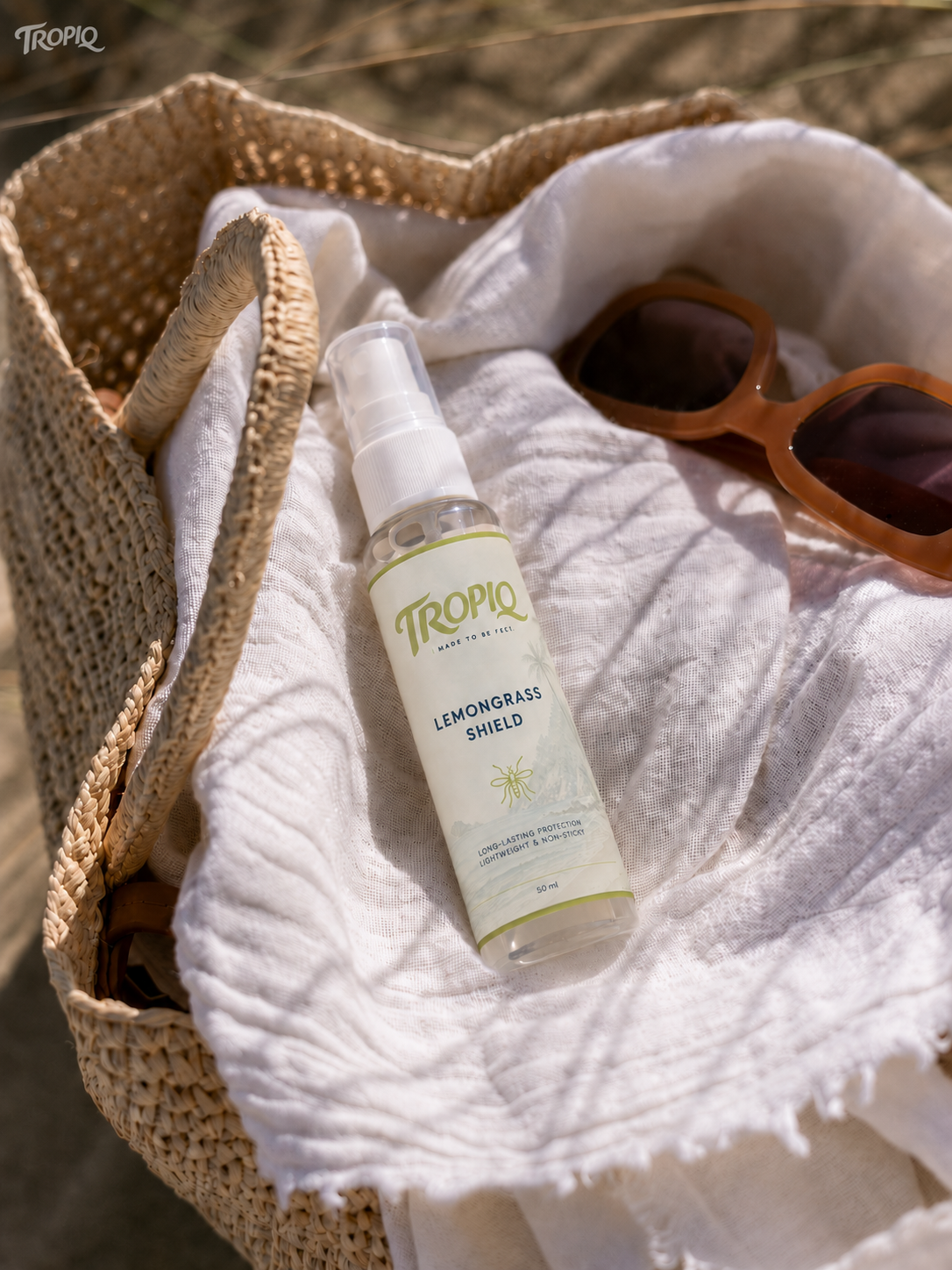
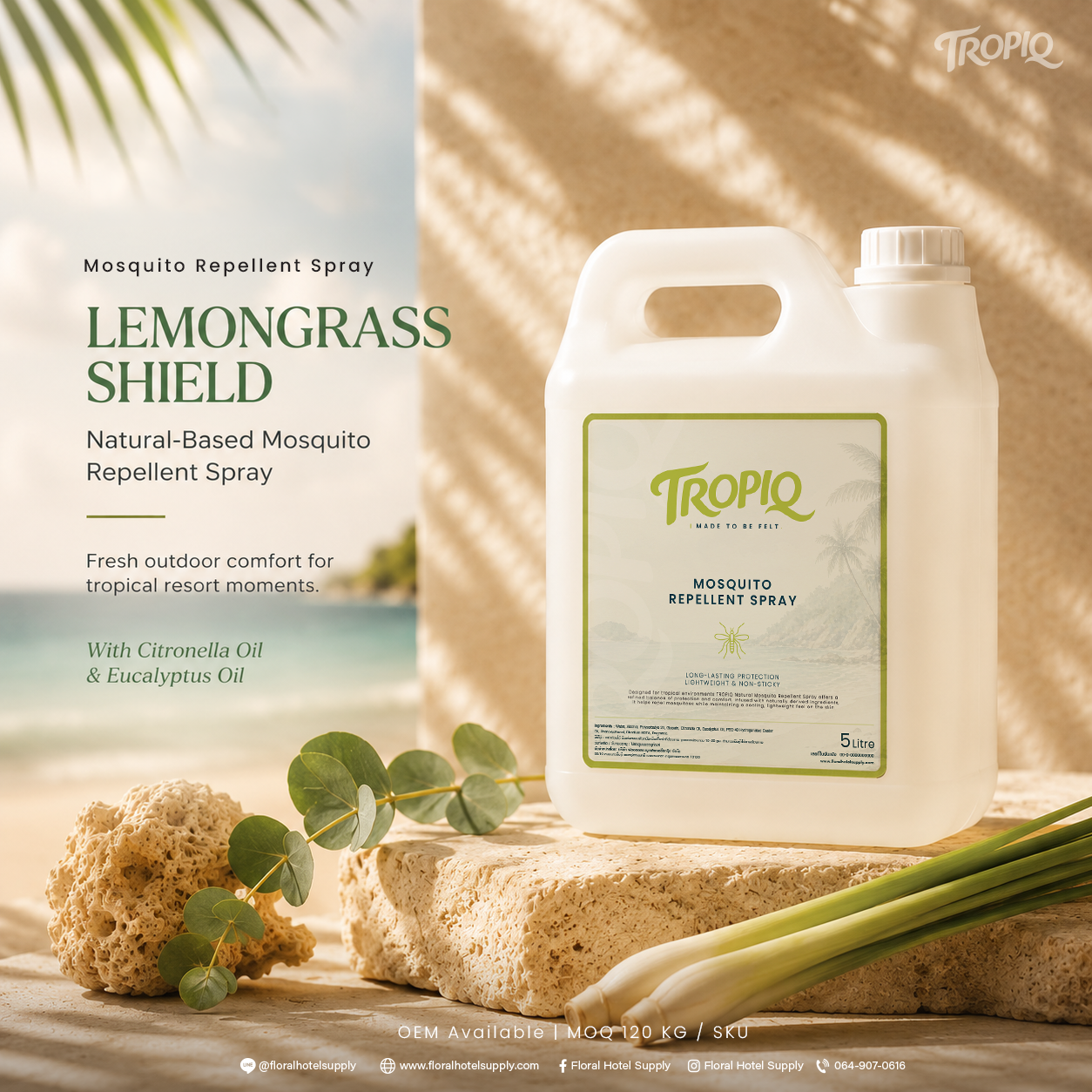
TROPIQ Lemongrass Shield was formulated specifically for this context. It's a natural-based mosquito repellent spray that takes its scent from citronella oil and lemongrass extract — botanicals that have been used for protection for generations, now in a lightweight, non-sticky format that actually feels good on skin.
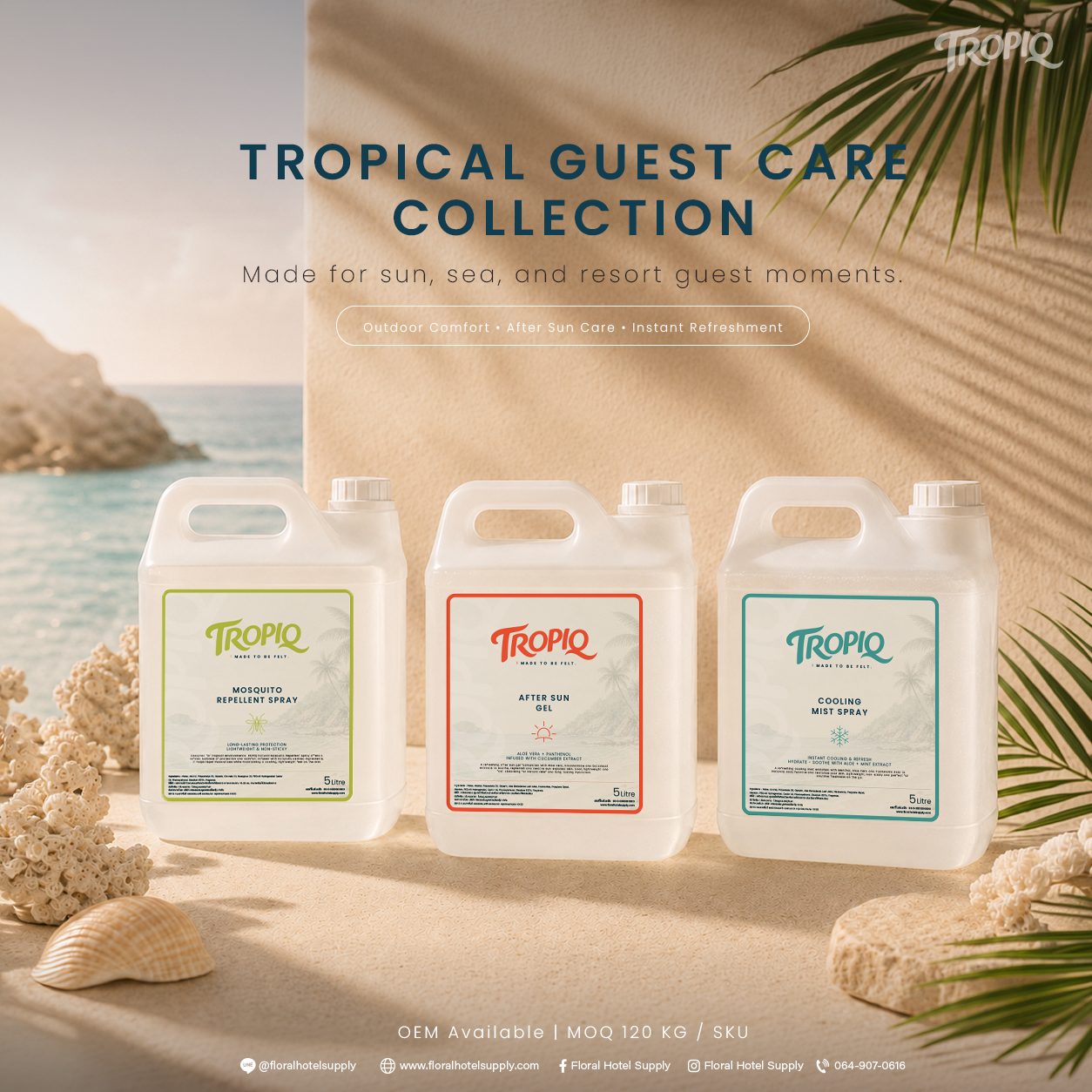
For resorts and hospitality partners, it's available for wholesale supply or as a foundation for a private-label programme — giving properties the option to carry a product that genuinely reflects their positioning while solving a very real guest need.
The standard for guest care is moving. Natural-based protection isn't a niche preference anymore — it's where the market is heading. The resorts that move early will be better placed to earn the loyalty of the guests who travel with their values.